
Why I Stopped Pitching Corporates and Built Arts Infrastructure Instead
12 April 2026
Written by
Blake Aitken
I’m an artist working across public interventions and cultural infrastructure. I’m currently building Patronage to help artists find funding, share their work, and connect with the people who support it.
One year ago I was standing in Te Komititanga Square at dusk holding a LiDAR scanner, trying not to look like I was casing the joint. Eight council wardens agreed. The homeless community around the square were more curious about what I was doing with a massive ass tripod.
I spent 90 minutes scanning. 11 gigabytes of point-cloud data freezing the movement of Auckland's civic heart. From this data, I hand-picked ten moments of connection and turned them into prints.
Then I tracked down ten Auckland leaders through Companies Office data and hand-delivered a print to each. Turned up at Graeme Hart's gate and got turned away by security. Left packages for the Gibbs family.
Two replies out of ten. David E. Thomas at Auckland Council told me to start small.
So I did. 100 Cones at Commercial Bay, zero budget, 126,000 impressions. That led to Cost of Passage on K Road with Auckland Transport. It proved the work could move in public and hold attention without permission.
But I couldn't stop testing the direct approach. I pitched Fix & Fogg a UGC engine built around their brand. Nothing. Designed Halter an experiential activation concept, 100 cows in Auckland Domain. Nothing. Sent Lion a blank CD. Received, apparently. Nothing back.
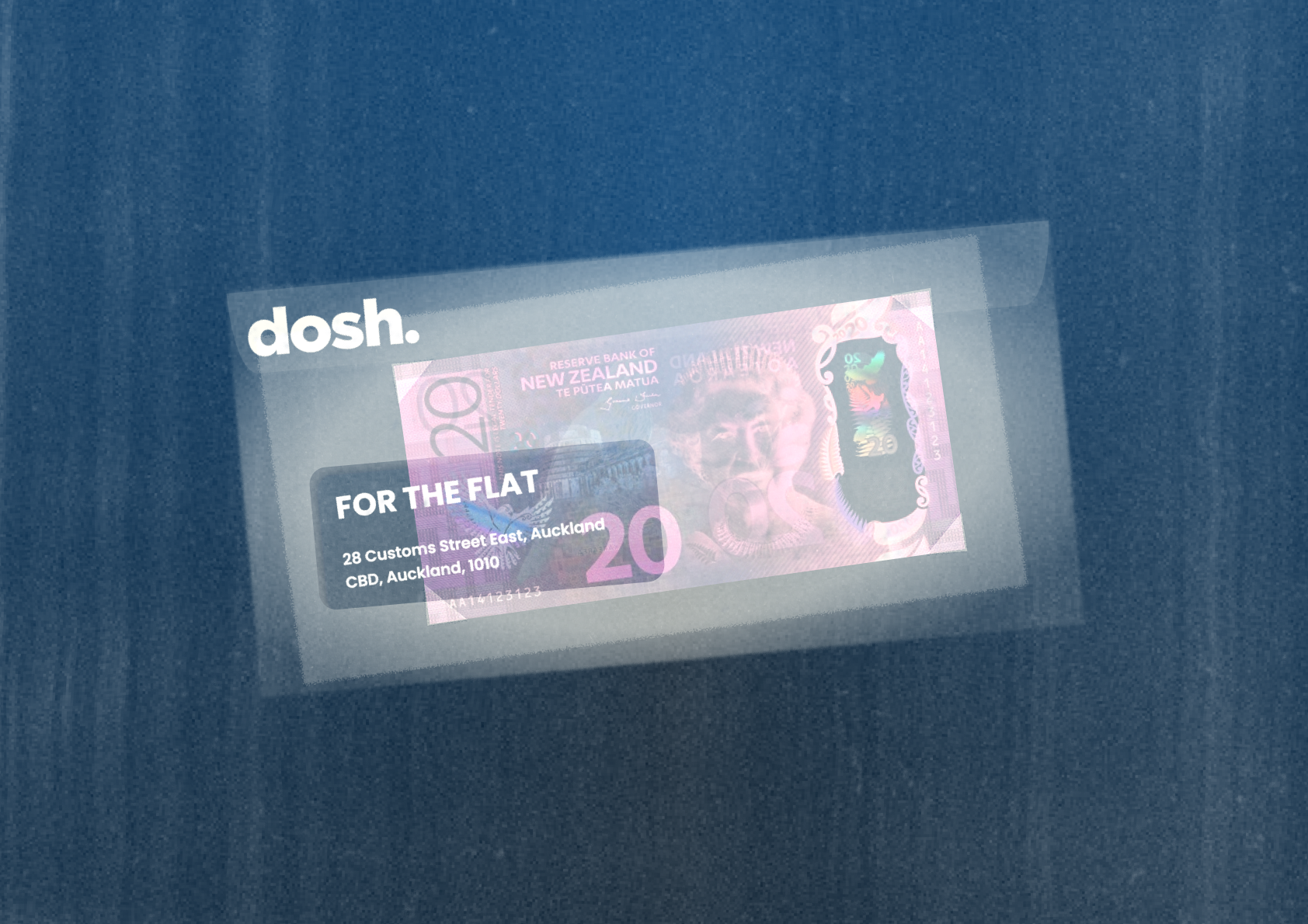
Then I designed Dosh a full physical acquisition campaign. $20 notes posted to flatshares during high-turnover windows, a QR code engineered to onboard entire households in one ritual. I posted the pitch with a $20 note inside as proof of concept.
It came back to me in the mail.
Every artist knows some version of this. You research the company, tailor the angle, offer something specific, and hear nothing. Not a no. Nothing. You do it again next month on a median income of $37k with no marketing team and no warm introductions. Even with Cost of Passage, 30+ businesses approached, tying their mission to the values of the nine charities I had been working with. Nothing.
The work was never the problem. One artist is just easy to ignore.
A community isn't.
When I stopped approaching companies as Blake Aitken and started approaching as Patronage, things changed in a measurable way. 150+ opportunities, a growing base of artists, an ESG measurement framework, and early conversations around billboard partnerships and construction hoarding activations that are already getting strong responses. The conversations started because there was something to plug into, not just a person asking for attention.
Manatū Taonga has invited Patronage to contribute to the Government's Creative and Cultural Strategy. Not because I wrote a better letter, but because there is infrastructure behind it.
The Dosh letter is still on my desk. I keep it there as a reminder. It is the clearest illustration I have of the gap Patronage exists to close. Not a gap in talent or ideas, but in leverage.
Looking forward to framing it.