
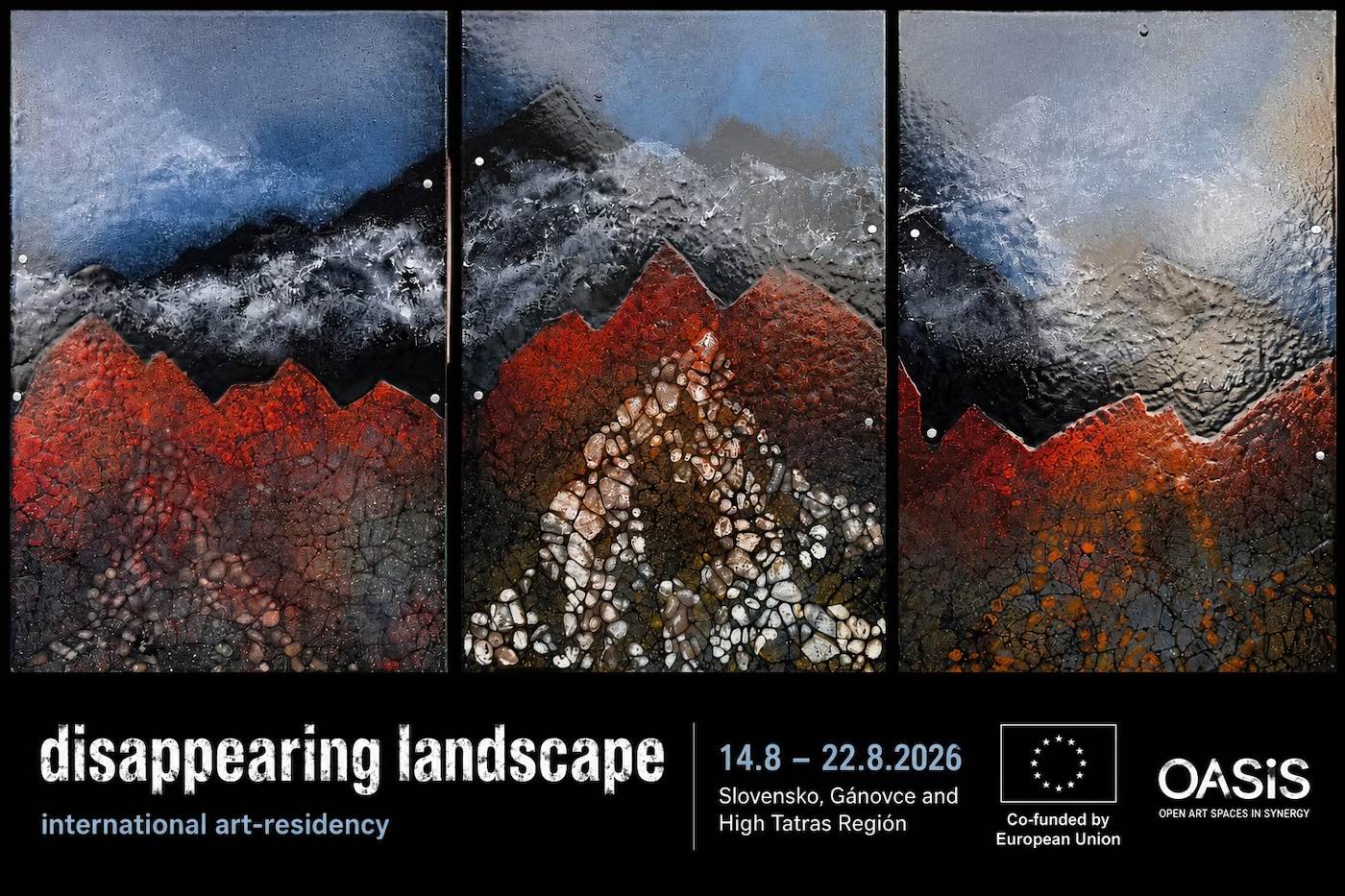
OASis Disappearing Landscape Art Residency 2026
Machaon International / Kolaj 22 / Ukrainian-Slovak HUB
Funding
€1,300 artist fee + up to €300 production support + up to €300 travel (international artists)
Opens
1 May 2026
Deadline
21 June 2026
Location
High Tatras & Poprad Region, Global
Entry Fee
Free
About
International art residency in Slovakia's High Tatras exploring ecological degradation of the Carpathian landscape through experimental creative practice.
The Disappearing Landscape Art Residency is an international programme taking place in the High Tatras and Poprad region of Slovakia from 14–22 August 2026. Organised jointly by Machaon International, the youth cultural initiative Kolaj 22, and the Ukrainian-Slovak HUB, it sits under the broader European OASis project.
The residency invites artists to engage with the rapid ecological degradation of the Carpathian landscape — from loss of wildlife habitats and fragmentation of migration corridors to the drying of rivers — driven by uncontrolled construction, tourism infrastructure expansion, and commercialisation. The programme connects environmental activism with experimental art, youth culture, music, and civic space.
Who can apply?
Visual artists, musicians, filmmakers, photographers, collectives, and small creative teams from anywhere in the world are eligible. The 2026 cohort will support 4 artists or music groups based in Slovakia and 6 international artists. Artists and groups based in Slovakia may negotiate a flexible participation format; international participants must be physically present on-site for the full residency period.
Disciplines welcomed:
Visual arts, photography, new media / film & video, music / sound art, and sculpture / land art. Following the destruction of Kolaj 22's former space by fire in 2025, the programme especially welcomes audiovisual works for alternative music events and sculpture or land art connected to that space, exploring themes of resilience and rebuilding.
What's provided?
- Free accommodation and daily meals throughout the residency
- Full access to workspaces, partner venues, and public presentation opportunities
- Guided excursions in the High Tatras region
- Artist fee: €1,300 per selected project (individual or collective)
- Production support: up to €300 for materials and production costs
- Travel stipend: up to €300 (international artists only)
Note: artists are responsible for paying their own taxes in their country of residence.
What's expected?
Participants must engage directly with the environmental focus of the residency, collaborate with other participants, take part in at least one community activity, and create a public artistic outcome connected to the theme. Projects should incorporate public-facing activities such as workshops, artist talks, open studios, guided walks, or performances. Collaboration with refugees and communities linked to the Ukrainian-Slovak HUB, Kolaj 22 volunteers, or local youth is strongly encouraged.
How to apply:
Compile your application in English and send a single PDF to zapovedniks@gmail.com with the subject line: DISAPPEARING LANDSCAPE 2026 – Application – Your Name. Your PDF should include:
- Project proposal (max 700 words) covering theme, format, and public presentation plan
- Short biography or CV, plus links to your online portfolio or website
- Exactly 5 photographs, drawings, or illustrative images related to your proposed project
- Technical and logistics sheet outlining your technical needs and production timeline
Key dates:
- Application deadline: 21 June 2026
- Notification of selected participants: 30 June 2026
- Residency on-site: 14–22 August 2026
Applications are assessed by a panel from Machaon International, Kolaj 22, and the Ukrainian-Slovak HUB on artistic quality and originality, relevance to residency themes, feasibility, community engagement potential, and environmental and social sensitivity.