
FEATURE 009: Isabella Rose Young's Arrested Gaze
13 August 2026
Featured artist
Isabella Rose Young
Isabella Rose Young is a multidisciplinary artist based in Aotearoa New Zealand with Forest Finn and Sámi ancestry. Holding a Master of Fine Arts with First Class Honours from Whitecliffe College of Arts and Design (2022), her practice explores the creative intersections of art, environmental science, ephemerality and the intangible interconnectedness between humans and the natural world. Working intentionally slowly through analogue photography, moving image, painting and writing, she invites meteorological forces, environmental phenomena and seasonal change to become active collaborators in her creative process.
I first found Isabella through her Patronage studio update regarding her feature in Lomography Magazine, a film photography interview built around LomoChrome Classicolor 35mm ISO 200. It is a good read and worth your time. When I looked into writing a feature, I noticed her following: 18,000 on Instagram, a Rolling Stone AU/NZ contributor credit, brand work for Ghanda, Yogi Peace Club, and Lomography itself. I hesitated to reach out, as I did not want her to feel like I was capitalising on her success, I didn’t want to ride her audience.
Isabella Rose Young is the better part of ten years deep into her practice. Diving through her LinkedIn reveals an artist whose reach extends well beyond the analogue photography she is now known for. Early painting and design work for the likes of Parley for the Oceans and Adidas, label designs for Garage Project's Velvet Fog wine and Muse beer, a mural titled The Sky is the Limit at Glenfield Library. She holds a Master of Fine Arts with First Class Honours from Whitecliffe (2022), and her practice now spans 35mm, medium format, Super 8, darkroom printing, installation, painting, and writing. She works across editorial, music, fashion, and fine art contexts, creating analogue visual storytelling for musicians, publications, and ethically aligned brands throughout Aotearoa and abroad. Recent musicians she has photographed include Wunderhorse, Mt. Joy, Sublime, and Le Currents Music Festival.
She holds Sámi and Forest Finn ancestry indigenous to Norway, and that relationship to landscape, slowness, and coexistence with the natural world informs both her artistic philosophy and visual language in ways that are evident long before she names them.
Central to Isabella's work is her daughter. She appears constantly, in nature immersions, in editorial commissions, in the intimate daily rhythms of a shared creative life. But we never see her face.
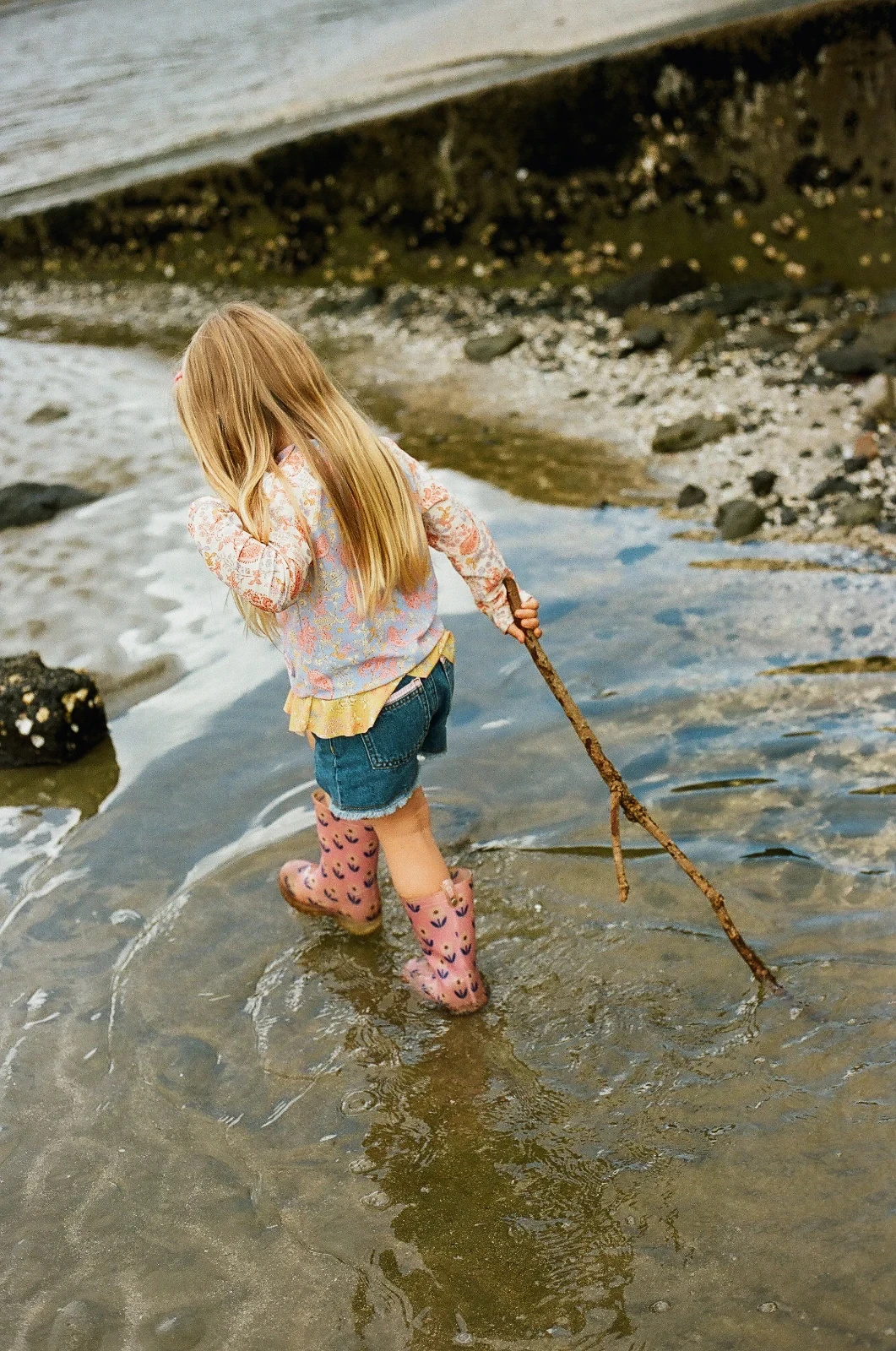
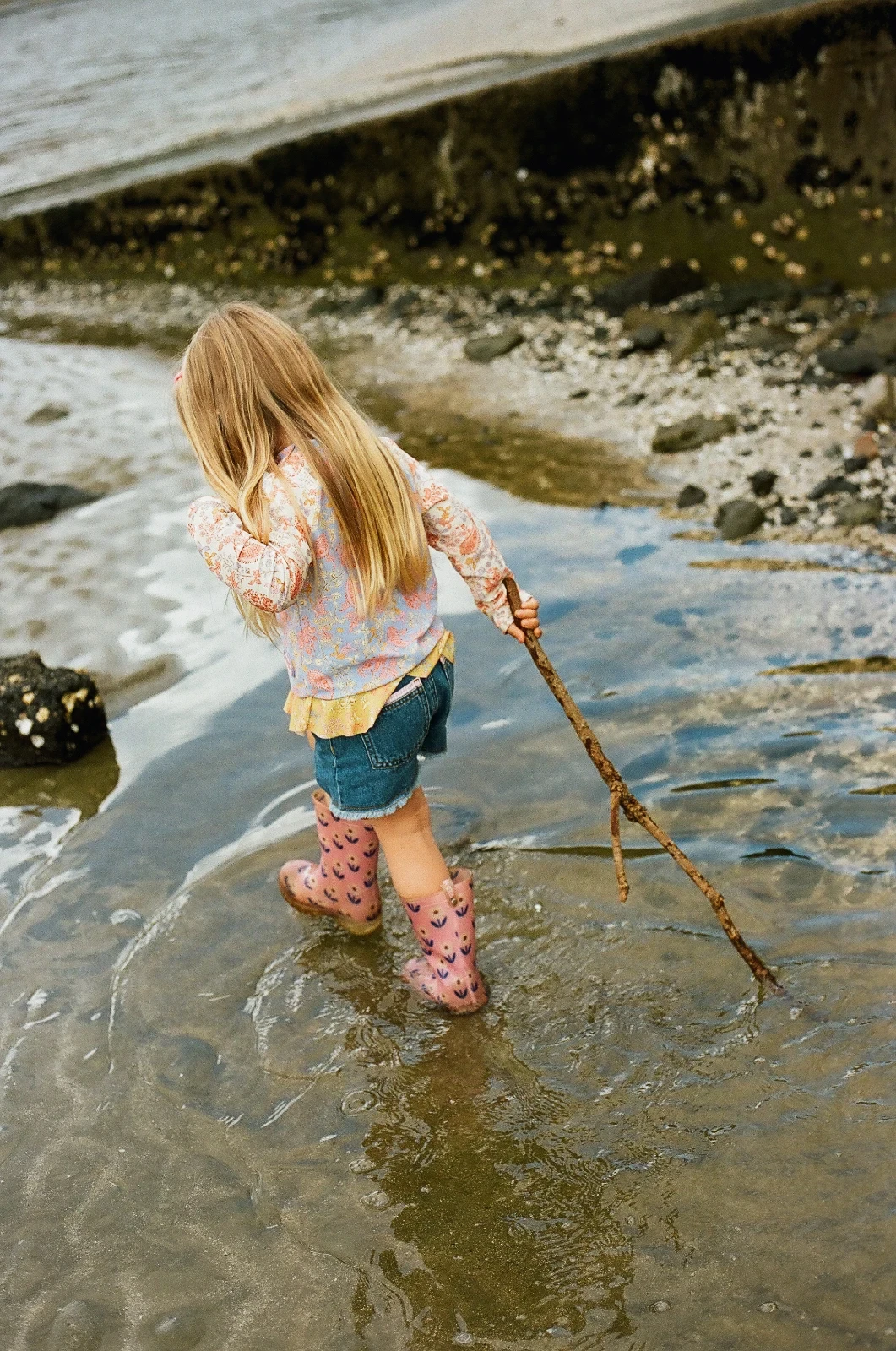
A Water Fairy (2025), an editorial commission for Ghanda, places her daughter centre frame, walking away from the camera, gumboots foot-deep in a stream, dragging a stick behind her in the estuary, adorned in vibrant pastelle-patterned clothing courtesy of the client. It is easy to discount this as commercial photography. Typically, children's clothing campaigns feature the child facing camera, face split with a smile. Isabella does the opposite. The photograph perfectly depicts the clothing it was commissioned for whilst preserving the anonymity of its subject, "honouring the privacy, protection and agency" of her daughter, as she put it when we spoke. It is commercial work that protects the person inside the commerce, and it is remarkable for that alone.
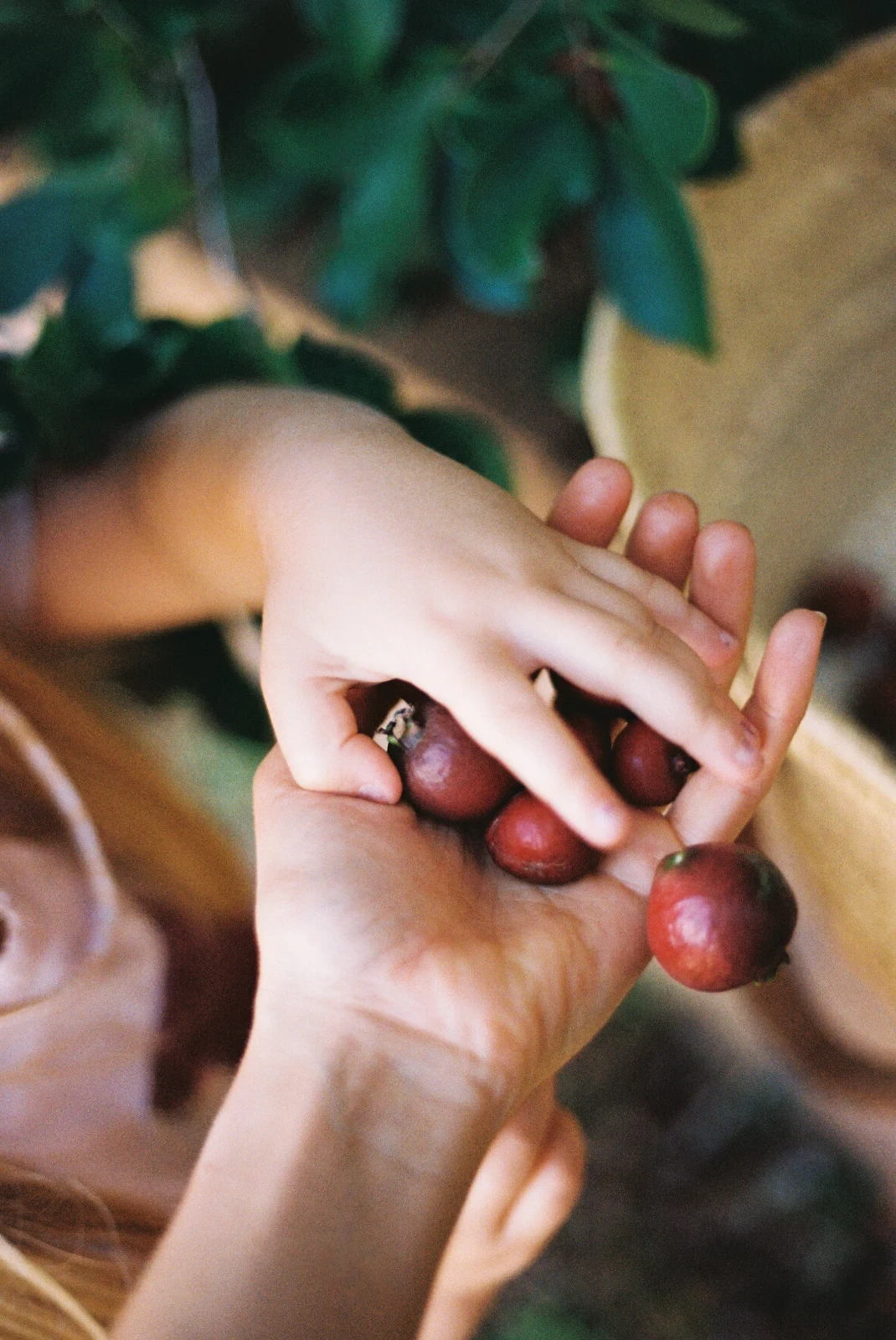
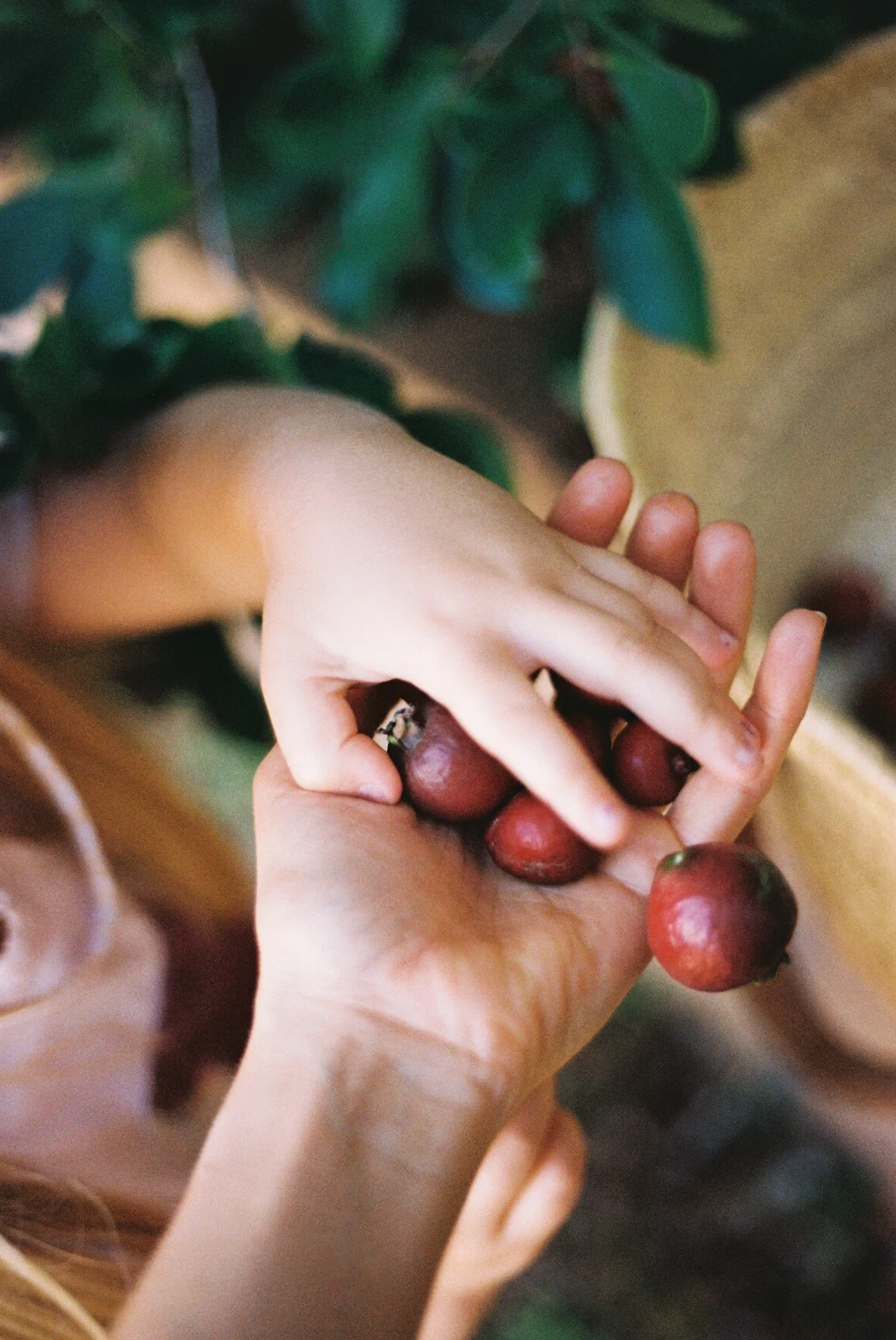
An Autumn Harvest (2026) completes it. A palette of ruby red fruit and emerald green leaves gives centre stage to two hands. A mother's hand, palm up, curls slightly open. A daughter's hand rests atop, grasping what I imagine are guavas. It is a maternal inversion of Michelangelo's The Creation of Adam: God reaching out to impart the spark of life. But where the Sistine fresco transfers intelligence, higher being, the weight of knowing, Isabella's frame transfers something else entirely. Love. A memory in autumn. Collecting fruit together. Not the burden of knowledge, but the blessing of small moments and acts of tenderness, through the eyes of a mother.
We asked Isabella about this theme directly. Her answer was immediate and unambiguous:
"I do not share her face as a way to honour her privacy, protection and respect of agency. The absence leaves space for presence without possession and allows the photographs to hold intimacy without the expectations that come with being seen."
I feel this keenly. My own work, Passage (With and Without You), features my daughter in bed, turned away from me, a colossal almost-black blue background of nighttime looming over her small frame. It is not just a scene a parent sees. It is about the distance of a father. How often, when you are busy, the majority of the time you spend with your child is spent looking at the back of their head. The painting prescribes the distance a parent might feel from their child, especially with estrangement from a co-parent. I rarely post my own daughter. Both out of fear of how images may circulate beyond my control, and out of respect for her right to consent to her own likeness. Children of our generation were completely at the mercy of their parents in the burgeoning age of social media, instant communication, and the wish to share your children with loved ones, whilst sacrificing their privacy to what is effectively the public domain. Isabella's withholding is not an absence. It is a form of care that the work enacts structurally, frame after frame, commission after commission. It shows us what she chooses to share, and the boundaries she wishes to keep.
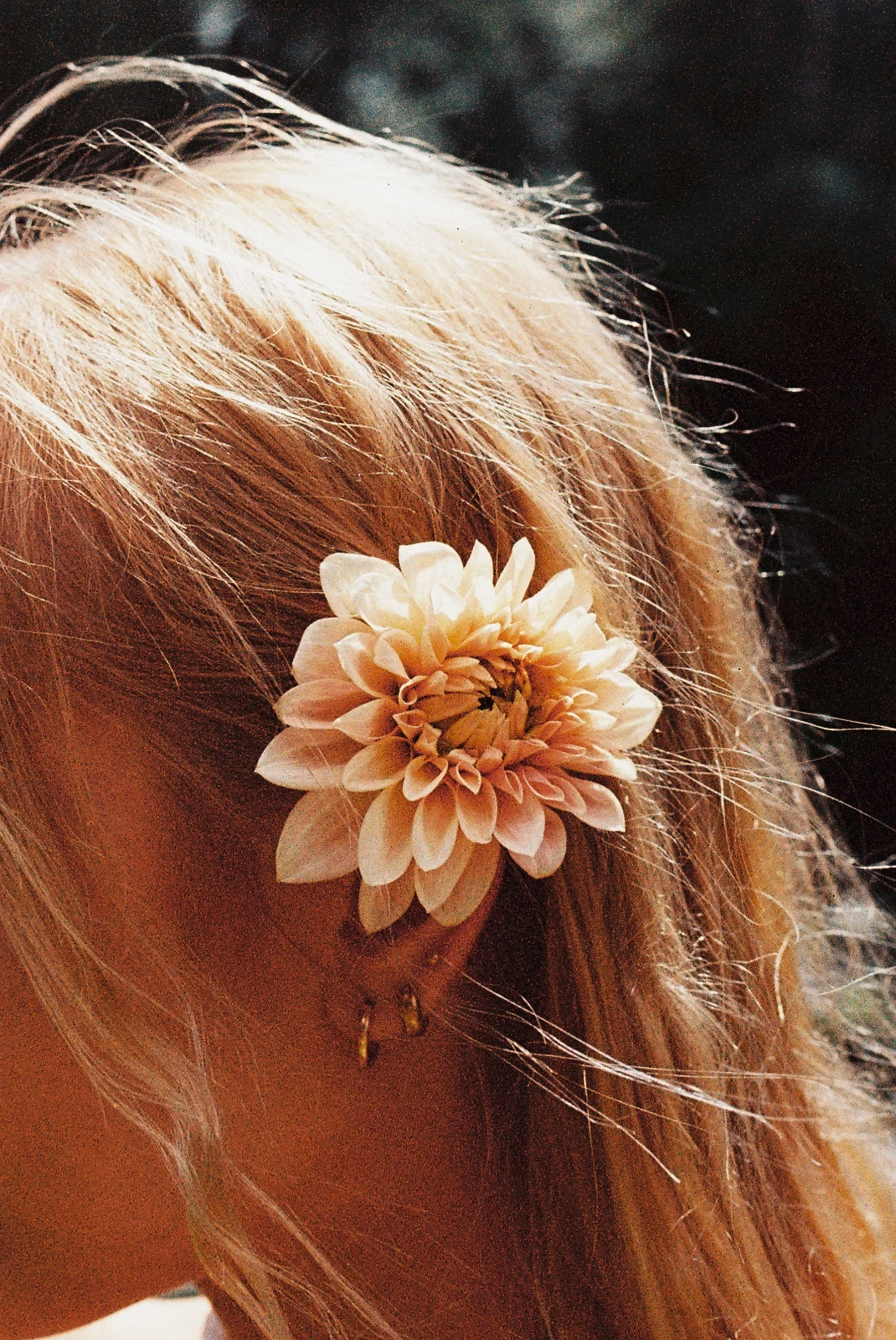
The withholding extends beyond her daughter. It extends to Isabella herself. Self Portrait with a Flower (2026), shot for Lomography Magazine on LomoChrome ClassiColor 200, shows Isabella in side profile. Blonde Scandinavian hair drowned in sunlight, a soft peach chrysanthemum tucked behind an ear, small gold hoop earrings catching the light. Her face is turned to the left. In other self-portraits, the pattern holds: her back turned to camera, hair obscuring her features, attention directed at a process work or a print rather than the lens. It is this stunning, summery image that evokes haybales on a pasture, sand on the beach. It inadvertently celebrates her Sámi and Forest Finn ancestry without declaring it. The withholding is consistent. When her daughter is the subject, the face is withheld. When Isabella is the subject, the face is withheld. The camera sees hands, hair, process, light, clothing, landscape. It does not see the thing we are trained to look for first. The face, identity and individual.
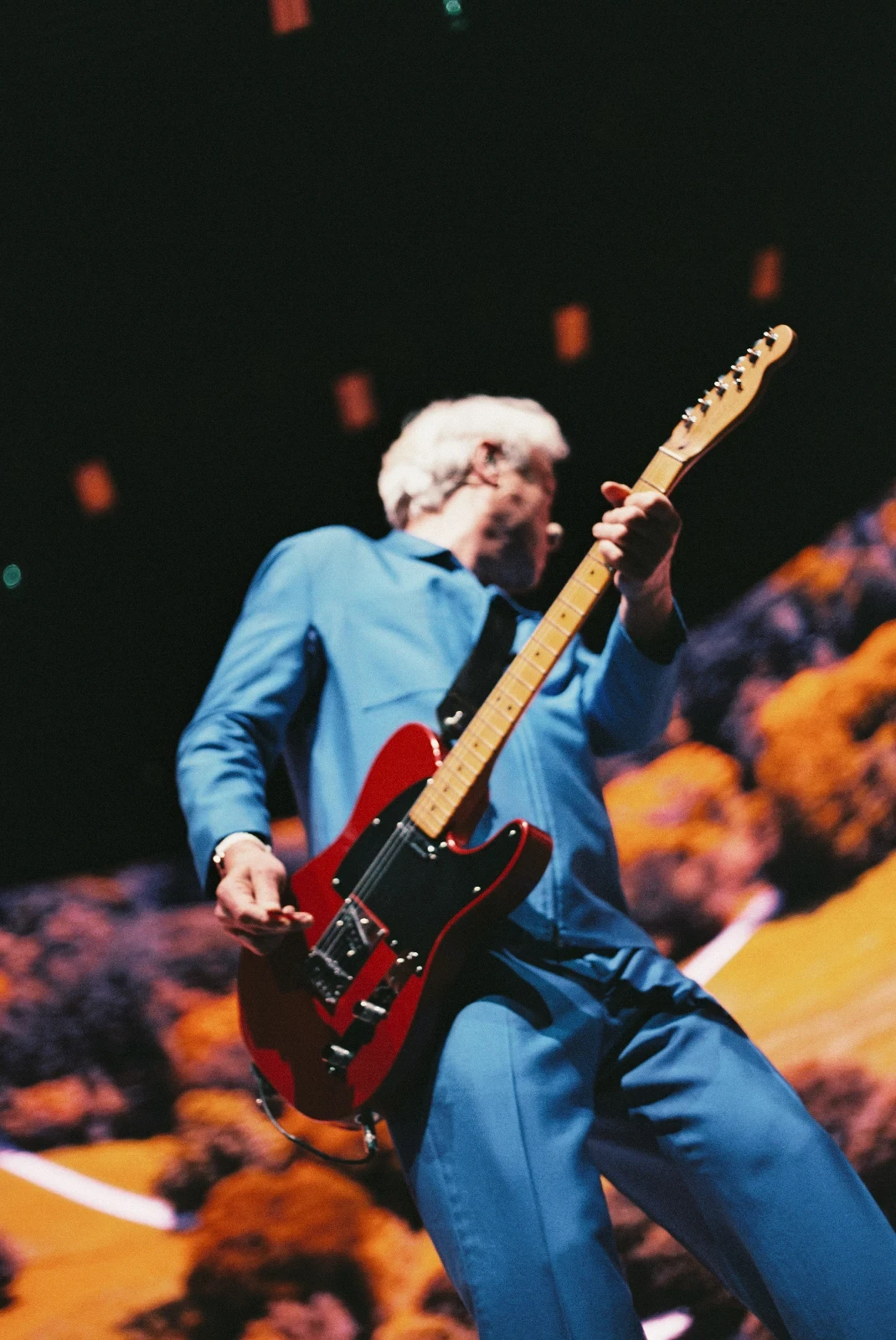
Isabella's concert photography tells a different story entirely, and the contrast is what makes the body of work cohere. David Byrne (2026), shot on expired Fujicolor 35mm, captures the Talking Heads frontman from below. His striking sky-blue figure towers above the spectator, red guitar angled diagonally, the dynamicism of the performance locked into a single decisive frame. It is incredible concert photography. It cements a moment in time, a king of his craft, and it does what the best single-frame concert photography does: makes you feel the sound through a still image.
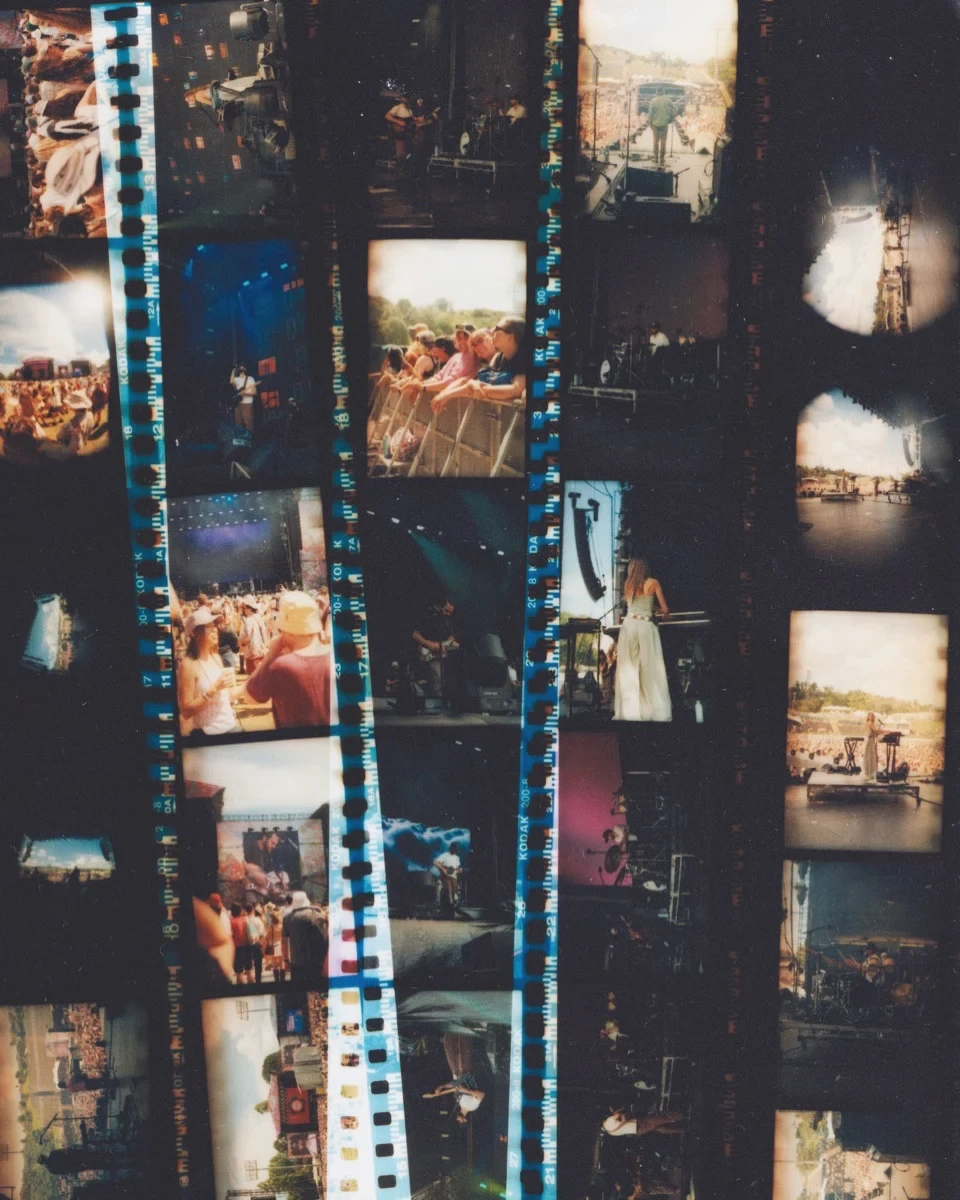
Mt. Joy at Laneway (2026) does the opposite. It is a handmade contact sheet, RA4 chemistry, 35mm negatives. A gorgeous masonry grid of concert photography ranging from crowd captures to photographs on stage facing out toward the audience. If a single photograph tells a thousand words, a contact sheet tells a million. It is durational. It is a concert's own gesamtkunstwerk. You see everything that was happening, every feeling, every emotion. The shots privy to the crowd, and the shots not privy to the crowd. Intermittent rectangles of summer light and communal joy sit strongly contrasted against the dark, almost-black backstage frames. It is simply a beautiful composition of festival moments, of communal experience, of Isabella, the photographer, having unrestricted access to the feeling of a concert.
Together, the Byrne photograph and the Laneway contact sheet show her range: she can deliver the editorial hero shot and the experiential document. The contact sheet is the more radical of the two. Most concert photographers select one frame and discard the rest. Isabella presents the full roll as the work. The process of selection is replaced by the process of accumulation. It is commercial art that maintains its purity, and does not fall into the compromise that commercial work often demands.
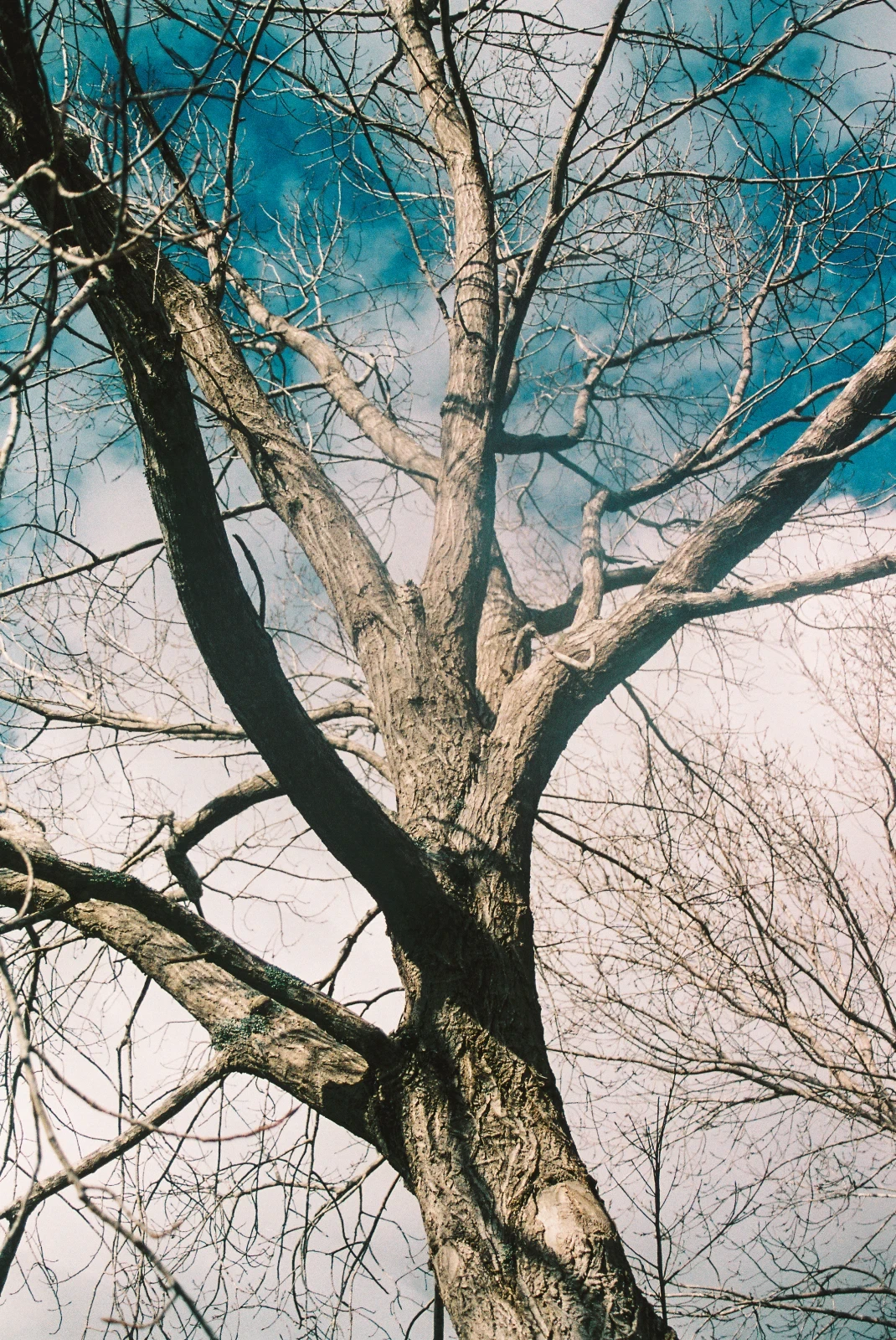
There is a keen focus on environment across the practice. Both the natural environment and the environment of a crowd, of an atmosphere. Equally Beautiful in Wintering and in Bloom (2026), shot on expired Kodak Ultramax, depicts a leafless autumnal scene: bare branches against a cobalt blue sky shrouded in cloud. The title alone does the work. It is a companion piece to the line that opened this feature and closes it: not all seasons are for blooming.
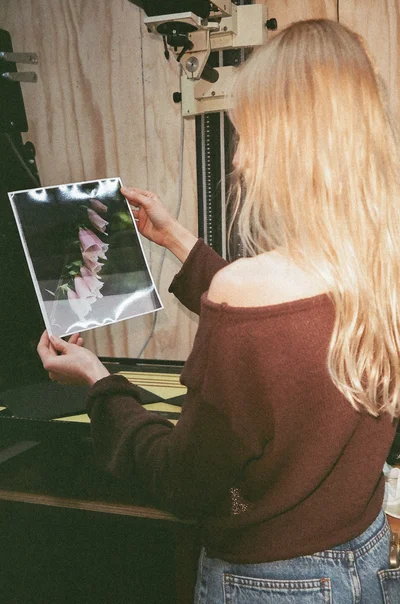
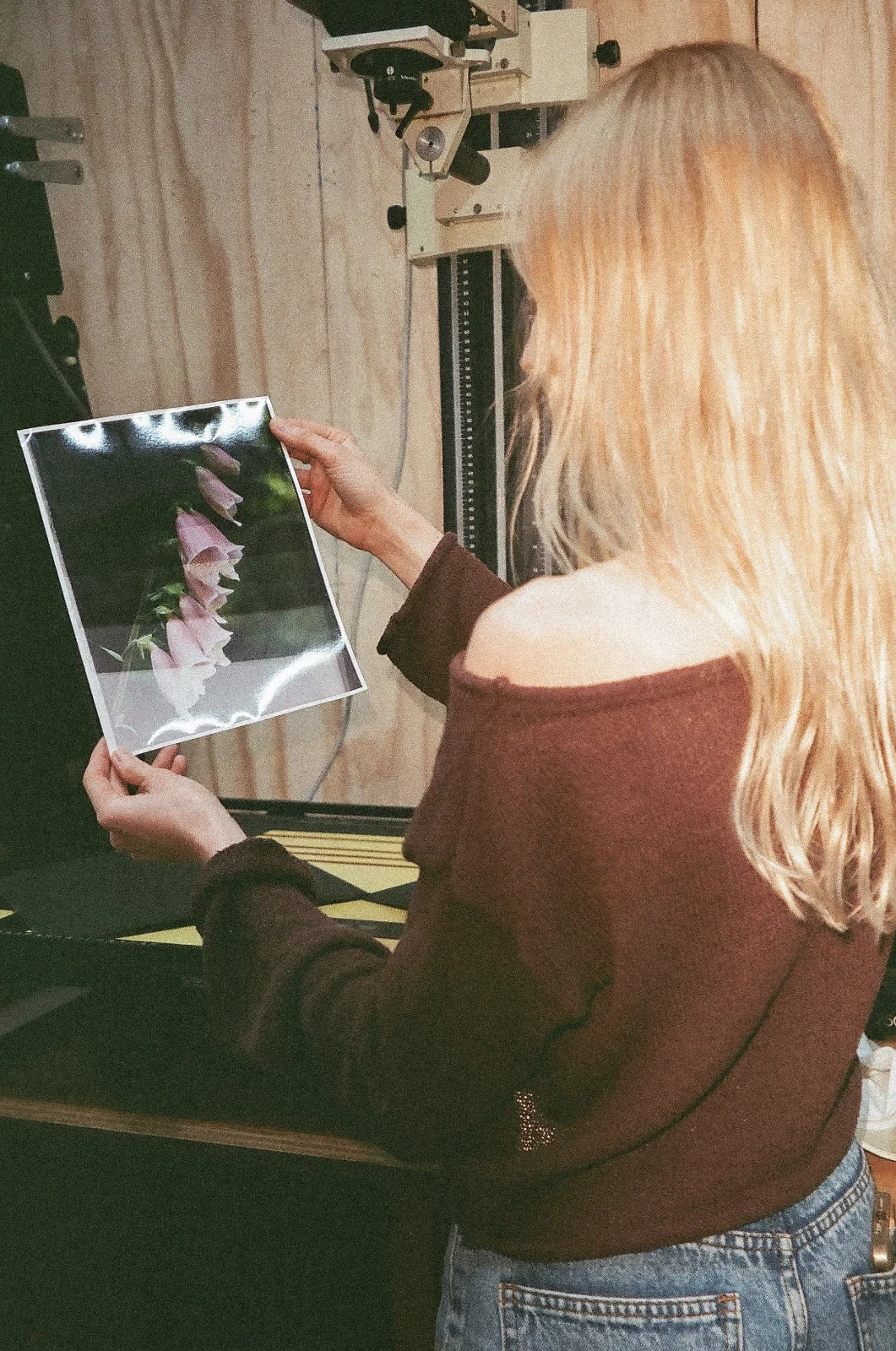
Isabella is as interested in depicting her process as she is in sharing the result. In one image, her back is turned to camera, holding a freshly made darkroom print of Fairy Bells. In another, an over-the-shoulder shot shows her filming a nature scene on Super 8, draped in atmosphere, the landscape filling the frame beyond her. I imagine this relates to the laborious, analogue nature of her practice, akin to her large-format painting, where the process is just as, if not more important, than the final image. When we asked what a commissioner needs to understand about her work that a conventional brief usually misses, she responded:
"A way of seeing that is adaptive and sustainably minded, moving between mediums depending on what the situation, deliverables and vision calls for. Imagine hiring a multidisciplinary artist through a portal to the 60s, 70s, 90s or early 2000s. Fully equipped with a darkroom, vintage cameras, film stocks and painting supplies. Working this way in the digital age brings a sense of mindfulness and low-tech analogue flair that doesn't lose quality or resonance, often it brings a deeper sense."
We asked what happens to a practice when the materials it depends on start disappearing. Behind the relationship of working with analogue processes, she told us, is a love for tangible making: repurposing equipment, extending the lifespan of vintage tools, foraging for pigments. If darkroom supplies ceased to exist, "it would just be the beginning of alternative image-making within my practice." She does not resist the disappearance of her materials. She adapts. That confidence comes from ten years of doing it.
She touches on everything so gently. So mindfully. Everything is done with purpose. And when we asked what we lose when being seen becomes more important than making, her answer was the simplest and most complete thing anyone has said to us in nine features:
"Not all seasons are for blooming, and we see that in nature; in the autumn, the winter, the spring and the summer. Likewise creativity ebbs and flows. Slower ways of making allow space for all of those phases: the play, wonder, delight and sharing alongside the equally important reflection, imperfections, mistakes and learning that leads to growth. I think that without that philosophy, we begin to lose connection to the meaning of art and the magic that comes with it."
Plants bloom in one season. They spend the other three doing something else: storing energy, dropping leaves, pushing roots deeper, going dormant. The bloom is the visible part. The rest is invisible, and it takes longer. Isabella Rose Young photographs the rest.
Selected Works:
An Autumn Harvest (2026). 35mm film positive.
A Water Fairy (2025). Editorial photography for Ghanda. 35mm film positive.
Mt. Joy at Laneway (2026). Handmade contact sheet, RA4 chemistry, 35mm negatives.
David Byrne (2026). Expired Fujicolor 35mm film positive.
Self Portrait with a Flower (2026). Lomography Magazine. 35mm LomoChrome ClassiColor 200.