
Finding New Opportunities for Artists Beyond Traditional Commissions
6 August 2026

Featured artist
Blake Aitken
I’m an artist and creative strategist working across art, architecture and the built environment. I work with developers, organisations and communities to identify where creative work can contribute to a place, then help bring those ideas into the world through artists, commissions and creative programmes. I’m also building Patronage, a platform connecting artists with funding, commissions and the people who support their work.
I'm not known for my public speaking. I've always shied away from it. There was nothing worse than having to give a speech in high school.
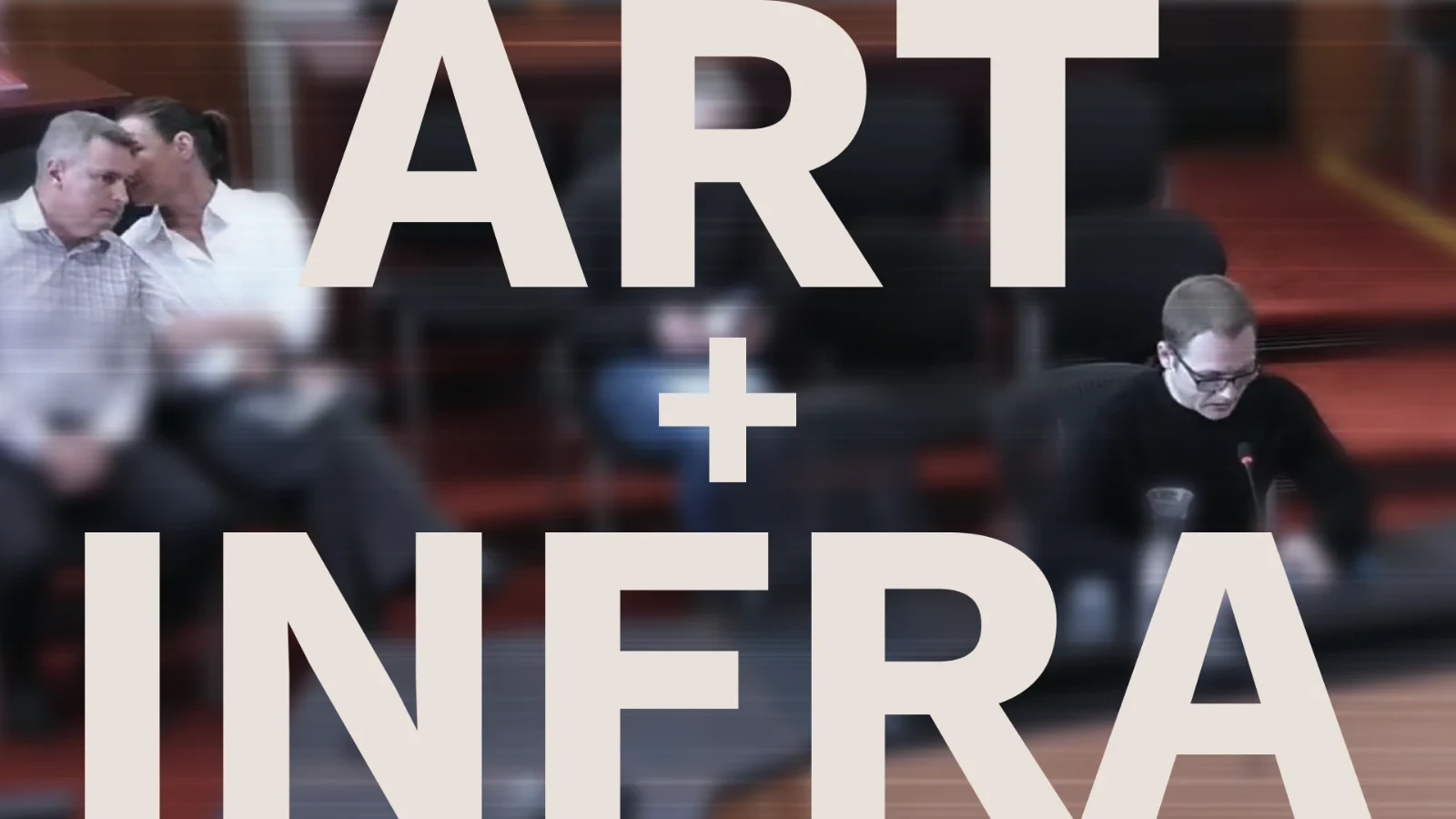
But on Tuesday I presented to Hamilton City Council's Revitalisation Subcommittee.
I'd much rather send a few emails and have those conversations over coffee. But every councillor I spoke to beforehand told me the same thing: I needed to get in front of the committee. Every staff member I spoke with recommended presenting before they could commit to anything.
At some point, I've realised that ideas can't stay in conversations forever. If I wanted to see these ideas become reality, I needed to have conversations with the people in a position to make them happen.
For artists, the challenge is that much of the existing investment in visual art is concentrated around traditional formats: paintings, sculptures and collection-based works. Those remain an essential part of a healthy arts ecosystem, but the opportunities they create are naturally finite. There are only so many collectors, galleries and institutions able to acquire individual works.
The opportunity, as I see it, is to expand the places where visual art is commissioned, experienced and valued. Developers, infrastructure providers, businesses and property owners are already investing in the environments people move through every day. Bringing artists into those spaces creates more opportunities for artists while allowing more people to encounter art as part of everyday life.
This isn't about replacing public funding, galleries or independent practice. It's about opening another pathway. The built environment is simply one lens through which to see that opportunity. Every day, decisions are made about infrastructure, development and public space. Artists have something valuable to contribute to those conversations.
So I talked about four surfaces: existing pieces of infrastructure that already have budgets, responsibilities and public impact attached to them.
The first was the EDB utility boxes in the city centre. Councillors had already identified them as something they wanted to improve, but I knew that process would likely take time. So I approached WEL directly.
The opportunity isn't simply to paint utility boxes. It's to rethink them as small pieces of public infrastructure that are maintained, protected, connected to their artists and capable of creating ongoing value.
In practice, that could mean artwork protected with non-sacrificial anti-graffiti coatings, supported by QR codes linking to a dual-purpose page. One side allows the public to report damage as soon as it happens. The other connects people to the artist's work, where prints or other products can be purchased. A portion of those sales could then support the ongoing maintenance of that artwork.
Too often, public art follows a simple transaction. An artist is commissioned, the work is installed and the relationship ends. Yet the artwork remains part of the public realm for years, sometimes decades. Perhaps the relationship with the artist doesn't need to end on opening day.
Next were bus shelters. Many of Hamilton's newer shelters have three sides of glass, with the rear panel often looking onto fences, walls or service areas. Covering that surface with artwork, protected by an anti-graffiti laminate, doesn't remove an amenity. It creates one.
Construction hoardings are a big part of what I'm currently working on, and perhaps the clearest example of this way of thinking. Whether temporary fabric mesh or rigid panels, hoardings often remain in place for months or years. They block sightlines, create inactive street edges and shape people's experience of a city during construction.
Hamilton has already shown the instinct is there. During the Ward Street works, the Hamilton Central Business Association installed signage on barriers so people knew businesses were still open. They recognised that these surfaces influence how people experience a place.
Sydney has demonstrated what a more permanent approach can look like, requiring creative hoardings in high-pedestrian areas since 2016. Artwork commissioned onto modular panels can be removed, stored, reconfigured and installed again on future sites. Rather than becoming waste at the end of a project, the artwork continues creating value.
Vacancy is another example of an existing problem where artists can contribute. Hamilton has approximately 40 vacant ground-floor shops in the CBD alone, and empty storefronts shape the experience of an entire street.
Art won't solve vacancy on its own, but it can activate those spaces while creating paid opportunities for artists. Temporary installations, window displays and creative activations make streets more engaging, while also giving landlords a stronger leasing tool than another board with a phone number few people notice.
None of this is art as decoration, nor is it art removed from its context. These are opportunities for artists to contribute where decisions, budgets and public experience are already being shaped.
The presentation went far better than I expected. Afterwards, a number of people told me I'd done well, which was reassuring because I was seriously bricking it beforehand.
I've realised some of the most interesting discussions I'm having aren't only with people in the arts. They're with developers, construction companies, utilities and property managers. They care about different problems, but that doesn't mean artists can't help solve them.
The challenge isn't a lack of creative talent. It's building the connections that allow artists to participate in opportunities they might never otherwise see, while ensuring they are fairly paid and continue to benefit from the value they create.
The future of the arts doesn't rest in one funding model or one sector. There are opportunities everywhere: in infrastructure, development, transport, property, public space, and far beyond the built environment.